Heart with 5 Lines Mini Embroidery
A Small Design That Carries Real Emotional Weight
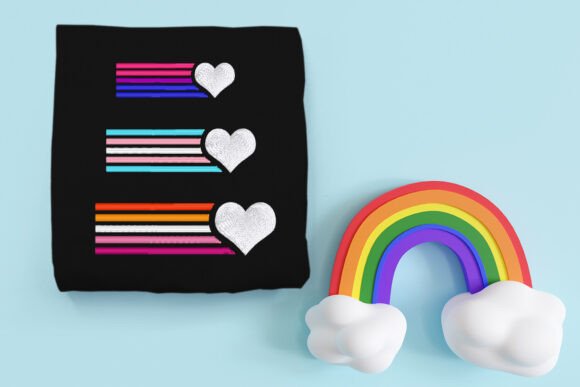
When I first opened the Heart with 5 Lines Mini Embroidery file, I didn’t see just another awareness motif—I saw a quiet, intentional gesture. It’s not flashy or ornate, but that’s exactly why it works. The heart shape is clean and balanced; the five lines radiating from its center are evenly spaced, neither too thin nor too bold. They invite color choice—not as decoration, but as meaning. Whether you’re stitching a pride-themed tote for your local boutique or embroidering a baby onesie for a friend’s rainbow baby announcement, this design lands with sincerity, not cliché.
How It Stitches Up in Real Projects
I tested Heart with 5 Lines Mini Embroidery on three everyday substrates: medium-weight cotton twill (for aprons), brushed poly-cotton sweatshirt fabric, and lightweight linen tea towels. On all three, it stitched cleanly—no thread breaks, no puckering—when paired with a light tear-away stabilizer and standard 40-weight embroidery thread. The lines hold their shape well, even at the smallest included size, which makes it ideal for subtle placements: near a pocket edge on a denim jacket, centered on a child’s cap, or tucked into the corner of a pillow cover.
What stood out was how adaptable it felt across use cases. As a machine embroidery design, it doesn’t dominate—it complements. On a custom embroidered tote bag, it added warmth without competing with bolder graphics. On a sweatshirt for a small shop’s Pride Month collection, it gave customers a recognizable symbol they could connect with emotionally, without needing text or slogans. And for Etsy sellers listing handmade products, it’s a low-risk, high-resonance addition—especially when paired with thoughtful thread color choices (navy + mustard + sage reads very different than fuchsia + sky blue + lavender).
Where This Design Shines—and Where to Pause
This isn’t a “throw-it-anywhere” embroidery file. Its strength lies in restraint—and that means knowing where *not* to use it matters just as much as where to use it.
- Avoid dense or highly textured fabrics like heavy terry cloth or bouclé knits—the fine lines can blur or disappear.
- Don’t push it onto stretchy fabrics (think ribbed cotton tees or performance blends) without proper cut-away stabilizer and careful hooping. The lines lose definition if the ground fabric shifts mid-stitch.
- Dark fabrics demand contrast testing: those five lines need enough value separation to read clearly. I recommend stitching a quick sample in black thread on navy fabric before committing to a full run.
- Caps and curved surfaces require sizing caution. The smallest size worked cleanly on a structured front panel, but the largest felt crowded and lost visual breathing room.
More Than Just an Awareness Symbol—It’s a Branding Tool
For craft business owners and digital product sellers, Heart with 5 Lines Mini Embroidery functions beautifully as a signature accent. Think of it as the embroidered equivalent of a well-placed monogram: small enough to be repeatable, meaningful enough to build recognition. I used it as a consistent element across a set of holiday embroidery kits—stitched on gift tags, pillow covers, and even the back of a reversible oven mitt—and customers commented on how “cohesive” the collection felt.
That cohesion translates directly to customer trust. When buyers see a thoughtful, technically sound embroidery file rendered consistently across products, they perceive more care in the overall handmade product—even if it’s just one small heart. For Etsy sellers, that perception lifts perceived value. For apparel decorators, it adds polish to otherwise simple custom apparel. And for small shop owners building boutique branding, it becomes a quiet, repeatable visual cue—like a whisper instead of a shout.
Designer Notes You’ll Actually Use
Before adding Heart with 5 Lines Mini Embroidery to your next project, here’s what I do—and recommend you do too:
- Test on scrap fabric first, especially if you’re using a new stabilizer combo or thread brand.
- Check thread color contrast in natural light—not just under your machine lamp.
- Review stitch density visually: zoom in on the file preview (if your software allows) to ensure the lines aren’t overly dense for fine fabrics.
- Confirm hoop size compatibility—this design fits comfortably in a 4x4 hoop, but double-check the dimensions listed in your file manager.
- Inspect small details at actual stitch-out scale: do the line ends taper cleanly? Is there any stray travel stitching?
- Test in black and white mockups to gauge clarity for screen-based previews (great for Etsy listings or printable mockups).
- Compare light and dark fabric backgrounds side-by-side—you’ll spot visibility issues fast.
- Use proper stabilizer: light tear-away for stable wovens, cut-away for knits or delicate linens.
- Verify licensing terms before selling finished items or bundling the digital embroidery file in a commercial product.
Final Thought: A Design That Earns Its Place
Not every embroidery file needs to be complex to be valuable. Heart with 5 Lines Mini Embroidery proves that sometimes the most effective designs are the ones that stitch reliably, resonate quietly, and leave room for the maker—and the wearer—to bring their own meaning. Whether you’re creating personalized gifts, small shop merchandise, or digital design assets for other crafters, this is the kind of embroidery design that earns repeat use. It doesn’t shout. It stays. And in today’s crowded handmade market, that kind of quiet consistency is rare—and worth keeping.