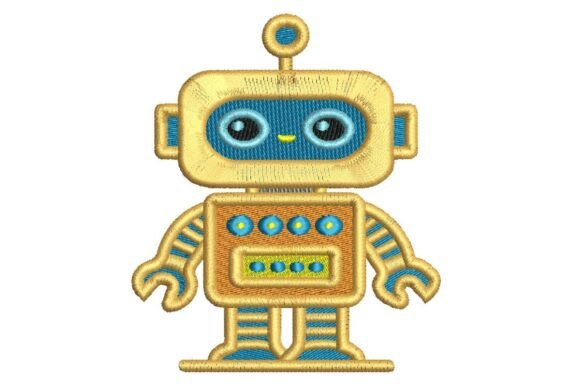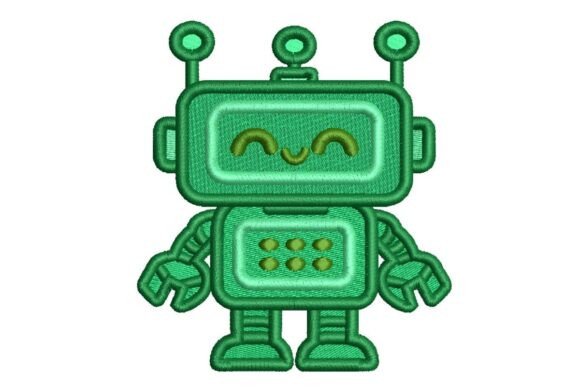
Loveable Robot Embroidery
First Impression: Playful, Modern, and Instantly Approachable
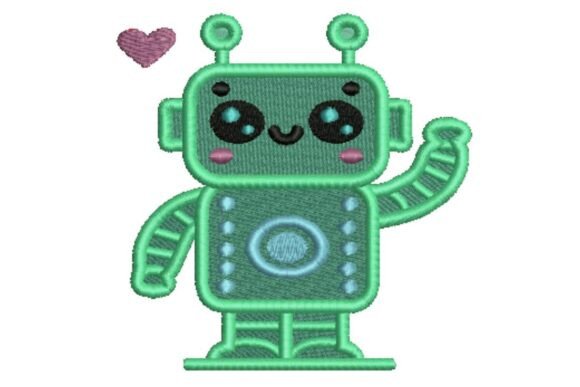
As an embroidery designer who’s prepped over 200 craft fair booths, I can tell you—Loveable Robot Embroidery lands with quiet confidence. It’s not loud or aggressive; it’s cute, modern, and warmly tech-inspired. The “loveable” in the title isn’t marketing fluff—it’s baked into the silhouette, the soft curves, and that clever heart accent. This isn’t a retro-futuristic robot or a steampunk gear monster. It’s friendly. It invites touch, smiles, and conversation—exactly what moves products off your table on a busy Saturday.
Where It Shines: Craft Fair & Handmade Market Realities
In my booth setup—featuring embroidered tote bags, aprons, tea towels, patches, caps, small fabric pouches, and pillow covers—Loveable Robot Embroidery stands out strongest when used as a focused, medium-scale accent. On a natural linen tea towel? Perfect—centered just below the hem, it reads clearly from six feet away. On a cotton canvas tote bag? Ideal at 3.5–4 inches wide—big enough to charm, small enough to leave room for texture and breathability. As an embroidered patch, it’s a bestseller: sewn onto denim jackets, backpacks, or kids’ lunchboxes, it signals personality without overwhelming.
It performs especially well on small shop products where handmade quality is the selling point—not technical precision. Customers don’t ask about stitch count; they say, “Oh! That robot has a heart—I need that for my nephew.” That emotional hook is gold at craft fairs and on Etsy listings.
Photography & Online Appeal: A Digital Seller’s Ally
Loveable Robot Embroidery photographs beautifully—even on phone cameras. Its clean lines, balanced proportions, and intentional heart detail translate well in natural light. No complex shading or gradients means fewer shadows to hide in mockups. Whether you’re using a printable mockup for your Etsy seller page or snapping a real-life shot of an apron on a wooden counter, this machine embroidery design holds clarity across formats.
That said—always create at least one real mockup before listing. A digital preview doesn’t capture how thread sheen plays against fabric texture, especially on terry cloth towels or brushed cotton pouches. I tested mine on oatmeal-colored canvas and charcoal twill—both worked, but the contrast was sharper on lighter fabrics.
Production Practicality: Batch-Friendly, But Not Blindly Scalable
This is a repeatable embroidery file—no tiny lettering, no micro-details that vanish under 3 inches. The heart accent is generous, not delicate. That makes it forgiving across hoop sizes and stabilizer choices. For commercial embroidery, it’s low-risk: moderate stitch density, no overlapping fills that cause puckering on lightweight knits.
Still—test on scrap fabric first. Dense stitch areas (like the robot’s rounded torso) can shift on stretchy or loosely woven fabrics. And while it works on dark fabric, confirm thread contrast: a soft blush pink heart on navy looks sweet in person but may read as gray in dim booth lighting. Always check spacing between elements—especially if pairing with text (e.g., “My Robot Loves You”)—to avoid crowding.
Careful-Use Notes for Real-World Production
- Textured towels: Use cutaway stabilizer + basting stitch to prevent shifting on terry loops.
- Curved cap surfaces: Avoid placing the full design across the front panel—scale down to 2.75” and center above the bill for clean registration.
- Thick fabrics (denim, canvas): Opt for sharp needles and slightly higher tension to pierce cleanly without skipped stitches.
- Small sizes: Below 2 inches, the heart detail begins to blur—reserve sub-2” versions strictly for patches or lining labels.
Booth Impact & Customer Engagement
At a crowded market, visual rhythm matters. I placed three Loveable Robot Embroidery items side-by-side: a mini pouch (3”), a tea towel (4”), and a child-sized cap (3.25”). Together, they created a cohesive, story-driven cluster—“Tech Meets Tenderness”—that drew families and young professionals alike. Parents pointed to the robot and said, “That’s the one.” Teens paused mid-aisle to snap photos. That kind of organic engagement is rare—and Loveable Robot Embroidery delivers it consistently.
It also lifts perceived value. An unembroidered cotton apron sells for $28. With Loveable Robot Embroidery centered on the pocket? $38 feels justified. Why? Because it reads as intentional, designed, and emotionally resonant—not generic or mass-produced. That supports brand consistency for small shop owners building a recognizable aesthetic around playful, thoughtful handmade product.
Designer-to-Designer Reminders Before You Cut Fabric
- Confirm commercial licensing before selling finished products—this is non-negotiable for Etsy sellers and boutique makers.
- Review the hoop size requirements. If it pushes the edge of your standard 5x7, consider resizing before digitizing for batch work.
- Match stabilizer to fabric weight—not just type. A lightweight tear-away may shift on slubbed linen; a medium cutaway adds security without stiffness.
- Compare thread colors across multiple fabric swatches. What reads warm on cream may look muddy on heather gray.
- Inspect stitch density in the heart and head joint—over-stitching here can cause stiffness in wearable items like caps or pouches.
Final Verdict: A Quiet Standout for Creative Entrepreneurs
Loveable Robot Embroidery won’t shout—but it will linger. It’s the kind of machine embroidery design that earns repeat customers, inspires Instagram tags, and turns casual browsers into gift buyers. It bridges kid-friendly charm and adult-friendly wit, fits seamlessly into both farmhouse and modern-minimal displays, and scales gracefully from digital embroidery file to tactile, finished product.
If you’re curating craft fair inventory, launching a small line of tech-themed handmade goods, or refreshing your Etsy shop with emotionally intelligent design assets—Loveable Robot Embroidery belongs in your next production round. Just remember: test, compare, stabilize, and always lead with the heart.